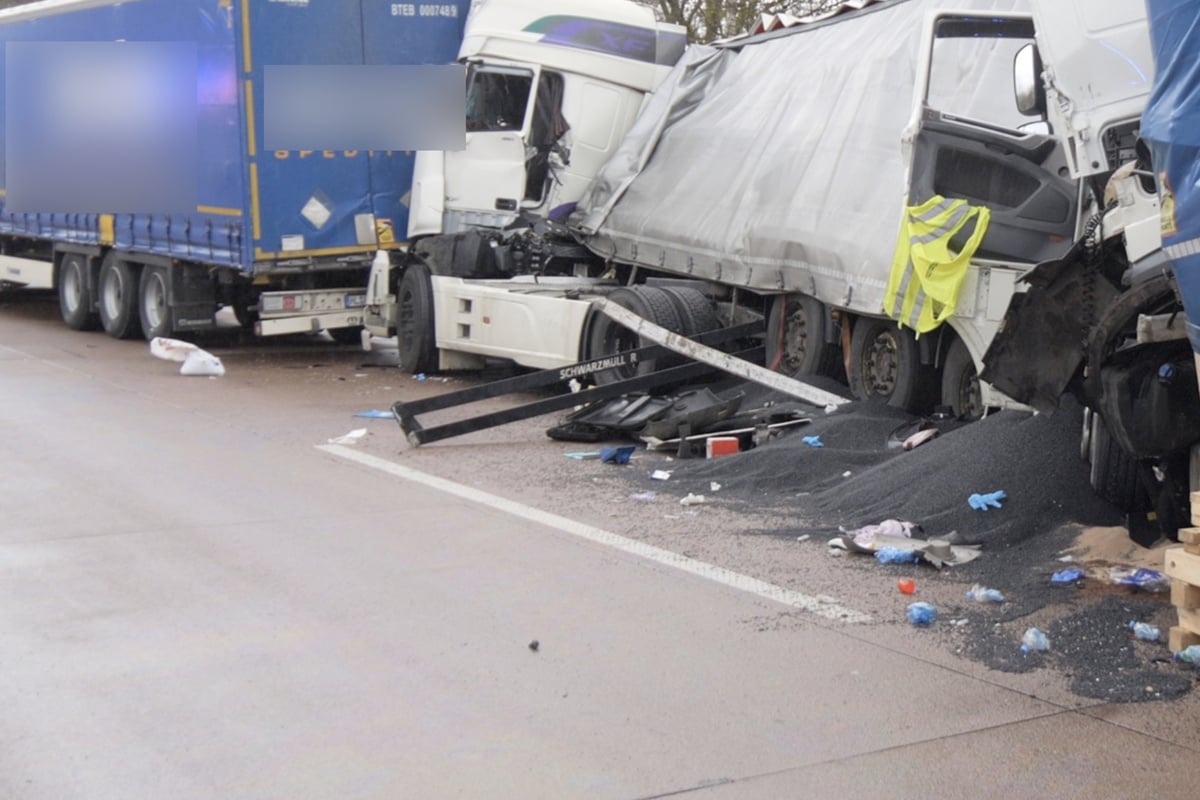
A shocking incident unfolded on the A1 near Stuhr today, causing major disruptions and raising serious concerns about road safety on one of Germany's vital highways. A severe multi-truck collision brought traffic to a standstill, necessitating extensive rescue operations and a prolonged closure of the autobahn. The incident, now a focal point of discussion regarding Unfall A1 Stuhr Heute, serves as a stark reminder of the dangers inherent in high-speed traffic, especially in zones prone to congestion and roadworks.
A Harrowing Incident: Three Trucks Collide on A1 Stuhr
In a terrifying chain of events, three heavy goods vehicles were involved in a devastating crash on the A1 motorway near Stuhr, just south of Bremen. The collision occurred around midday, specifically between the Dreieck Stuhr interchange and the Brinkum junction, heading in the direction of Hamburg. This section of the autobahn is known for its heavy traffic flow and occasional construction zones, both of which played a critical role in precipitating the incident.
The Scene Unfolds: A Chain Reaction
According to initial police reports, traffic had begun to back up behind a construction site. The first two trucks in the lane, driven by a 36-year-old and a 49-year-old respectively, managed to come to a halt in response to the forming queue. However, the third truck, a articulated lorry driven by a 31-year-old, failed to react adequately to the sudden cessation of traffic ahead. Despite an apparent attempt to brake, the third vehicle collided with tremendous force into the rear of the 49-year-old's truck. The impact was so severe that all three vehicles became inextricably interlocked, creating a mangled mass of metal and debris across the carriageway.
Severe Injuries and Lifesaving Operations
The immediate aftermath of the crash was chaotic, with emergency services quickly mobilised. The drivers of the second and third trucks bore the brunt of the impact. The 31-year-old driver of the rearmost truck was found trapped in his driver's cab, suffering from life-threatening injuries. Similarly, the 49-year-old driver of the middle truck was also severely injured and trapped. Firefighters faced the arduous task of extricating both individuals from the wreckage, a delicate operation that required specialised equipment and immense skill. Once freed, their critical condition necessitated rapid transport to medical facilities. Two rescue helicopters were deployed, airlifting the most severely injured drivers to nearby hospitals. The driver of the first truck, a 36-year-old, fortunately sustained only minor injuries, a testament to the varying degrees of impact endured by each vehicle in the collision.
Widespread Disruption: Road Closures and Traffic Chaos
The magnitude of the accident and the extensive damage to the vehicles, coupled with the critical nature of the injuries, necessitated an immediate and complete closure of the A1 in the direction of Hamburg. This closure, commencing shortly after noon, effectively choked off a major artery for northern German traffic. The implications were immediate and far-reaching.
Navigating the Aftermath: Diversions and Delays
For many hours, the A1 remained impassable, with authorities estimating that the complex recovery operations would extend well into the evening. Traffic was diverted via alternative routes, including local roads, which quickly became overwhelmed. Commuters faced significant delays, with tailbacks extending for kilometres on both the autobahn approach and the designated detour routes. Freight traffic, a constant presence on the A1, was particularly affected, leading to logistical nightmares and missed delivery schedules. Such incidents underscore the fragility of infrastructure and how a single major event can ripple through an entire region's transportation network.
The Cost of Collision: Financial and Logistical Burden
Beyond the human toll, the financial implications of such a crash are substantial. Police estimates placed the material damage alone at approximately 245,000 Euros. This figure accounts for the extensive damage to the three heavy goods vehicles, which in many cases may be declared total losses, requiring costly replacements. However, this sum barely scratches the surface of the total economic impact. Lost productivity due to traffic delays, increased fuel consumption from diversions, the cost of emergency services deployment, and potential long-term medical care for the injured drivers add considerably to the overall burden. It's a sobering reminder that road safety is not just a matter of personal well-being, but also has profound economic consequences.
Beyond the Crash: Understanding Causes and Preventing Future Tragedies
While investigations into the exact cause of this specific Unfall A1 Stuhr Heute are ongoing, such multi-vehicle heavy goods accidents often stem from a combination of factors, many of which are unfortunately preventable. The prevalence of roadworks and the sudden onset of traffic jams ("Stauende") create particularly hazardous conditions.
Common Factors in Heavy Goods Vehicle Accidents
- Insufficient Following Distance (Tailgating): Large trucks require significantly longer braking distances than passenger cars. When drivers follow too closely, especially at high speeds, they leave little room for error when traffic suddenly slows or stops.
- Driver Distraction: The use of mobile phones, in-cab entertainment systems, or even simply a lapse in concentration can have catastrophic consequences, particularly when approaching static or slow-moving traffic.
- Fatigue: Long hours behind the wheel can lead to reduced reaction times and impaired judgment. While regulations exist to combat driver fatigue, violations or extreme circumstances can still lead to dangerous situations.
- Speeding in Congestion: Even slightly exceeding the safe speed for prevailing traffic conditions, especially near roadworks or expected bottlenecks, dramatically increases the risk and severity of a collision.
- Inadequate Warning Systems: While digital signs often warn of upcoming traffic, drivers may not always heed them or understand the severity of the impending slowdown.
Essential Safety Tips for Drivers on the Autobahn
Given the frequent and sometimes fatal incidents on this stretch of highway, including previous events like the one described in Fatal A1 Stuhr Accident: One Dead, Highway Closed for Hours, it's crucial for all motorists to adopt proactive safety measures:
- Maintain a Safe Following Distance: The "half-the-speed-in-metres" rule (e.g., 100 km/h means 50m distance) is a good guideline, but in heavy traffic or adverse conditions, even more space is needed. For trucks, this distance should be even greater.
- Stay Alert to Traffic Flow: Continuously monitor traffic far ahead, not just the vehicle directly in front. Look for brake lights several cars ahead to anticipate slowdowns.
- Reduce Speed in Congestion & Roadwork Zones: Always obey posted speed limits, but also be prepared to reduce speed significantly even without explicit warnings if traffic appears to be building up.
- Avoid Distractions: Keep your focus solely on the road. Put away your phone, eat before or after your journey, and manage in-car entertainment responsibly.
- Form a "Rescue Lane" (Rettungsgasse): In the event of a traffic jam on multi-lane roads, remember to form a rescue lane between the leftmost lane and the lane to its right. This is legally mandated and vital for emergency vehicles.
- Take Regular Breaks: If driving long distances, ensure you are well-rested and take frequent breaks to combat fatigue.
The A1 Stuhr: A Stretch Under Scrutiny
The A1 around Stuhr and Bremen appears to be a section of the autobahn that frequently experiences severe incidents. From single-vehicle accidents to multi-car pile-ups and heavy goods vehicle collisions, the frequency and severity of crashes in this area are concerning. This latest incident, along with others documented such as those in A1 Stuhr Accidents: Multiple Crashes Lead to Fatalities & Closures, highlight the need for continuous vigilance by authorities and drivers alike. Factors like high traffic volume, the presence of major interchanges, and ongoing infrastructure projects can contribute to a heightened risk profile for this stretch of road. Road safety experts consistently advocate for driver education, stricter enforcement of traffic laws, and continuous improvements in road design and warning systems to mitigate these risks.
The Unsung Heroes: Emergency Services in Action
The rapid and coordinated response of police, fire services, and paramedics was crucial in managing the crisis on the A1. Firefighters, equipped with specialised cutting and spreading tools, worked tirelessly to free the trapped drivers. Paramedics provided immediate medical attention at the scene, preparing the critically injured for transport. The deployment of rescue helicopters speaks volumes about the severity of the injuries and the necessity for rapid medical intervention. Meanwhile, police officers managed the accident scene, secured evidence, redirected traffic, and worked to keep the public informed. Their professional and selfless efforts under immense pressure are vital in minimising casualties and restoring order after such devastating events.
The Unfall A1 Stuhr Heute is a grim reminder of the unpredictable nature of road travel and the devastating impact that a moment of inattention or a failure to adapt to changing road conditions can have. As the recovery efforts continue and the injured fight for their lives, this incident should serve as a powerful call for all drivers to prioritise safety, maintain vigilance, and exercise extreme caution, especially on busy highways like the A1. Let this tragic event spur a renewed commitment to responsible driving and collective road safety.