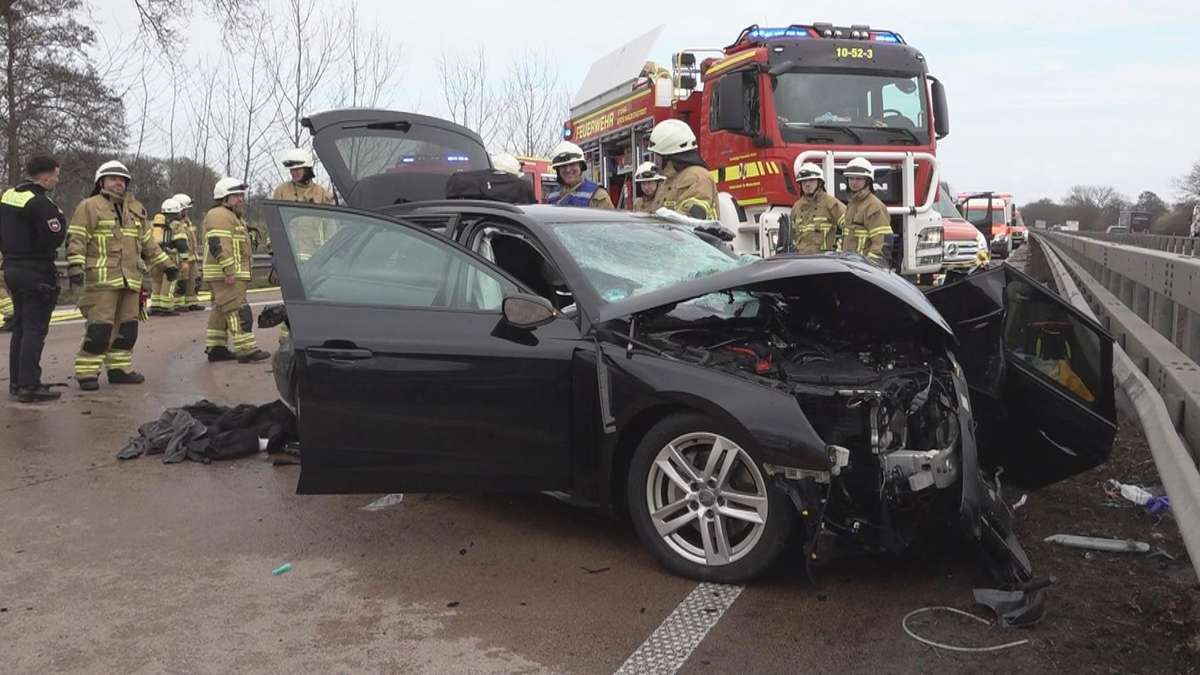
Tragedy Strikes A1 Stuhr: One Dead, Major Highway Shutdown
The A1 motorway near Stuhr, a critical artery for traffic moving through northern Germany, has once again been the scene of severe and tragic accidents. In a particularly devastating incident on Tuesday, a fatal collision claimed the life of one person and left several others with life-threatening injuries, leading to extensive closures that snarled traffic for hours. This harrowing event, often searched for by terms like Unfall A1 Stuhr Heute (A1 Stuhr Accident Today), underscores the inherent dangers of high-speed motorways and the critical importance of road safety.
Emergency services converged on the scene, deploying a full complement of rescue personnel, including paramedics, firefighters, and even rescue helicopters, highlighting the gravity of the situation. The incident not only caused immense personal suffering but also brought significant disruption to regional transport networks, impacting countless commuters and freight operations.
Detailed Account of the Fatal Tuesday Collision
The fatal accident unfolded on Tuesday afternoon, specifically between the Brinkum junction and the Stuhr Triangle, heading in the direction of Osnabrück. At approximately 12:00 PM, a preliminary incident occurred where two vehicles collided, subsequently coming to a halt on the left-hand lane. This initial collision set the stage for the catastrophic chain of events that followed.
A 70-year-old male driver from the Oldenburg district approached this obstructed section of the highway. It is believed he was forced to brake his vehicle suddenly due to the traffic situation ahead. Tragically, a 23-year-old male driver from the Gifhorn district, following behind, seemingly reacted too late. Despite potentially initiating braking, his vehicle collided with considerable force into the car driven by the 70-year-old.
The impact was devastating. The second vehicle involved in the initial accident was propelled violently to the left, crashing into the central barrier. Concurrently, the first vehicle involved, the one driven by the 70-year-old, was shunted to the right, impacting the outer guardrail. The aftermath was grim: the 72-year-old female passenger in the second vehicle suffered catastrophic injuries. Despite immediate efforts by emergency responders to resuscitate her at the scene, she tragically succumbed to her injuries. Both drivers, the 70-year-old and the 23-year-old, sustained life-threatening injuries and were immediately transported to nearby hospitals. One driver was airlifted by rescue helicopter to Evangelisches Krankenhaus Oldenburg, while the other was rushed by ambulance to Klinikum Bremen Mitte.
Police authorities, who launched an extensive investigation into the circumstances of the crash, estimated the material damage to the vehicles and infrastructure at approximately 32,000 Euros. The extensive nature of the accident necessitated a complete closure of the A1 in the affected direction for many hours, allowing rescue efforts, accident reconstruction, and subsequent clear-up operations to proceed safely.
The Aftermath: Emergency Response and Road Closures
The scene on the A1 was one of intense activity following the fatal collision. As news of the severity of the crash spread, a massive deployment of emergency services was initiated. Firefighters from multiple local units rushed to the scene, facing the harrowing task of extracting trapped individuals from the mangled wreckage. One person, believed to be one of the severely injured drivers, was reportedly entrapped and required specialized hydraulic cutting equipment for liberation. The presence of at least one rescue helicopter highlighted the critical condition of the injured and the need for rapid medical transport to specialized trauma centers.
The immediate and prolonged closure of the A1 motorway in the direction of Osnabrück was unavoidable. This meant significant diversions were put in place, channeling heavy traffic onto alternative routes, which quickly became congested. For hours, commuters faced considerable delays, and logistics companies saw their schedules disrupted. The process of documenting the accident scene, clearing the debris, and recovering the heavily damaged vehicles is complex and time-consuming, explaining why such closures can last well into the evening or beyond.
Such incidents serve as a stark reminder of the immense pressure and challenges faced by emergency responders who work tirelessly under often traumatic circumstances. Their coordinated efforts are crucial in minimizing further casualties and restoring normalcy as quickly as possible.
Another Major Incident: The A1 Stuhr Truck Pile-Up
While the fatal car crash dominated headlines, it wasn't the only significant incident to plague the A1 near Stuhr recently. Just days prior, on a Wednesday, the same stretch of highway, this time heading towards Hamburg between the Stuhr Triangle and the Brinkum junction, was the site of a severe truck pile-up. This separate incident, also triggering emergency responses and extensive closures, further illustrates the high-risk nature of this busy corridor.
Three heavy goods vehicles were involved in a massive collision that occurred around 12:00 PM. According to police reports, the incident was triggered when a traffic jam formed behind a construction site. The first two truck drivers, aged 36 and 49, successfully brought their vehicles to a halt. However, a 31-year-old driver of a subsequent articulated lorry failed to stop in time, despite attempting to brake, crashing into the rear of the 49-year-old's truck. This impact caused all three trucks to become heavily interlocked.
The consequences were severe: the 31-year-old driver was trapped in his cab and sustained life-threatening injuries. The 49-year-old driver was also trapped and suffered severe injuries. Both were extricated by firefighters and airlifted by rescue helicopters to hospitals. The 36-year-old driver sustained only minor injuries. The A1 in the direction of Hamburg was completely closed for many hours due to the extensive recovery operations, which were complicated by the size and weight of the vehicles and their entanglement. Police estimated the damage from this incident at a staggering 245,000 Euros. For more details on this specific incident, you can read our article: A1 Stuhr: Three Trucks Crash, Major Delays and Severe Injuries.
These two major incidents, occurring in quick succession, paint a concerning picture of road safety on the A1 near Stuhr. The presence of both construction sites and heavy traffic volumes creates a particularly volatile environment, demanding heightened vigilance from all road users. For a broader overview of recurring issues on this vital route, refer to: A1 Stuhr Accidents: Multiple Crashes Lead to Fatalities & Closures.
Enhancing Road Safety on the A1 Stuhr: Tips for Drivers
The recent spate of severe accidents on the A1 near Stuhr serves as a potent reminder for every driver to prioritize safety. While external factors like construction zones and high traffic volume contribute to risk, driver behavior plays a crucial role in preventing tragedies. Here are some actionable tips to enhance safety, especially on busy motorways like the A1:
- Maintain Ample Following Distance: This is perhaps the most critical rule. A safe distance allows you crucial reaction time if traffic ahead suddenly slows or stops, especially in congested areas or near construction zones. The "two-second rule" is a good minimum, but increase it in adverse conditions or heavy traffic.
- Stay Alert and Focused: Distracted driving – whether from mobile phones, infotainment systems, or even intense conversations – significantly impairs reaction time. Keep your eyes on the road, anticipate potential hazards, and avoid distractions at all costs.
- Adapt Speed to Conditions: The posted speed limit is for ideal conditions. Reduce your speed in heavy traffic, bad weather, or when approaching known bottlenecks and construction areas. Aggressive driving and speeding reduce your ability to react to sudden changes.
- Be Aware of Traffic Flow: Pay attention to brake lights far ahead, not just the car directly in front of you. Look for signs of slowing traffic or potential incidents further down the road.
- Plan Your Journey: Before setting out, check real-time traffic updates and weather forecasts. If major delays or hazardous conditions are reported on your route, consider alternative paths or adjusting your travel time.
- Take Regular Breaks: Driver fatigue is a significant contributor to accidents. If you're on a long journey, stop every couple of hours to rest, stretch, and refresh yourself.
- Understand Construction Zone Dynamics: Construction zones often involve narrowed lanes, sudden lane shifts, reduced speed limits, and workers close to traffic. Exercise extreme caution, reduce speed, and follow all signage.
These measures, collectively adopted by all road users, can significantly reduce the likelihood of accidents and help ensure that the A1, and all motorways, remain as safe as possible for everyone.
Conclusion: A Call for Greater Vigilance
The tragic death and numerous serious injuries resulting from recent accidents on the A1 near Stuhr are a somber reminder of the fragility of life and the devastating consequences of motorway collisions. From the fatal car pile-up to the severe truck crash, these incidents highlight the critical need for unwavering vigilance from all drivers. While authorities work to improve infrastructure and emergency response, the primary responsibility for road safety lies with each individual behind the wheel. By adhering to safe driving practices, maintaining focus, and respecting the conditions of the road, we can collectively strive to prevent future tragedies on vital routes like the A1, ensuring that headlines about